Monday, April 28, 2014

The Father's Have Gone into the Forest to Look for Their Daughters

Mother crying for her daughter
In the dead of the night on April 14th, 234 school girls in the northeastern town of Chibok in Borno State, Nigeria were kidnapped from their boarding school after being recalled to take a Physics exam. 43 girls have escaped, 187 girls remain missing according to the principle of the school.  All of the other schools in the region were closed amidst threats from terrorist organizations who are against education, especially the education of young girls. The prime suspects are Nigeria’s Islamic extremist rebels, known as Boko Haram, a violent group campaigning to establish an Islamic Shariah state in Nigeria, whose 170 million people are about half Muslim and half Christian. They are also responsible for multiple bombings in Abuja just prior to the mass abduction and have been implicated in abducting some girls and young women in attacks on schools, villages and towns but this mass kidnapping is unprecedented. Boko Haram is an enemy of education, in fact, the name Boko Haram in slang terms means “Western education is sinful.” The extremists have been known to use the young women as porters, cooks and sex slaves.


How did it happen? A group of men dressed like militia shot down guards and stormed into the girls' dormitory claiming to be government forces sent to rescue them. They loaded the girls on a truck and took them towards the forest, but some of the girls jumped off the back of the truck and escaped. There are also some reports of girls escaping from the forest. The Nigerian President, Goodluck Jonathan, has been criticized for not doing enough to ensure the speedy return of the girls back to their homes. Some of the difficulty lies in the geography of the region. The girls are being kept in a dense forest that makes a ground level attack difficult and given the fact that the girls are hostages, an aerial attack is dangerous.

Some of the fathers and brothers of the girls hopped on motorcycles and headed into the forest in search of the girls. They followed the tracks of the kidnappers up to Baale village, where villagers told them the gunmen had passed through "and were camped with the girls in a creek some hundreds of meters outside the village." The villagers gave account that some of the girls had even been brought back to the village at gunpoint to fetch water. One of the fathers told CNN, "we were warned by residents of Baale not to proceed, saying they feared for our lives because our sticks and (outdated) guns were no match for the heavy arms of the Boko Haram gunmen," he explained. "The villagers warned us we would all be killed if we dared face the gunmen and would put the lives of our daughters in danger. We have therefore abandoned the search for our daughters since we know where they are but we don't have the capacity to liberate them," Mark added.


Perhaps these girls wanted to be Scientists or Doctors or Engineers or Mathematicians. Now they may be sex slaves. God forbid.

This is a very difficult to post to write because it appears that the situation is helpless. It appears that there is nothing that we can do in our own corner of the world while the girls are being entrapped and enslaved in another small, dark, heavily guarded corner of the world. But such is not the case. We can pray for their safe return and we can try and bring as much media attention to this as possible by staying informed and spreading the word. The brighter the light that shines on this situation the more heat the government will feel to ensure the girls are returned home safely. According to NPR, activists in Nigeria are plannig a million-women march on Abuja this Wednesday to demand their rescue.

Free. People. Everywhere.


Do you think the media is doing a good job covering this topic?

Friday, April 11, 2014

How I Did It: Optometry


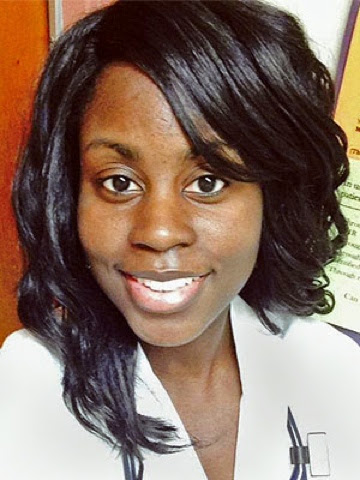
Dr. Ngoddy is an optometrist in the metro Atlanta area. To ask her questions, comment below! 

1) How and why did you choose optometry?
      
      Interesting story, I attended Xavier University of Louisiana located in New Orleans, LA. This school is known nationwide for its role in getting African American students into doctoral programs. When I started college I was pre-med and had every intention of attending medical school. Alas, life had an entirely different plan for me. I applied my senior year of college for admission into medical school but my MCAT score was low. During my last semester of college I was riding with one of my college roommates discussing our next moves ( basically I was venting she knew her next move), and when I finally paused to take. Breath she said " you should look into optometry, it's mostly non-invasive, has a good quality of life and good pay- plus you will still be a primary care doctor and have patients." This conversation sparked something in me that day and led me to form my plan B. So while I applied again for medical school I also applied for the OAT and applied for optometry school. After being wait listed for medical school (even though my MCAT score improved significantly) I decided God was leading me in a different direction and I decided to follows best decision I've ever made in my life.

2) What is a typical work day?

There are many different modalities in which optometrist can work. I chose to become an independent contractor so I own my own business and lease space from a Chain. Specifically, I lease space from a Sam’s Club located in Morrow, GA. I also provide fill in services for other doctors in the Metro Atlanta area. In the duration of my day I provide several primary care optometric services to patients including diagnosis and treatment of common ocular conditions such as myopia, hyperopia, and presbyopia (basically finding glasses/contact lens prescriptions), as well as notso common conditions like glaucoma. In the event that a patient requires surgical intervention or treatment beyond my scope I refer the patient to a specialist and co-manage the condition.


3)What is the most and least rewarding aspect of your job?

Most rewarding aspect is that the majority of people seeking my services can have a favorable outcome with the prescription of glasses or contact lens. The least rewarding is havingto give someone bad information about their vision. Most ocular emergencies require immediate attention for the best preservation of vision however patients are often slow to act and this can lead to poor prognosis.

4)What educational requirements are necessary prior to applying to optometry school?

Undergraduate degrees and the fulfillment of course requirements set forth by the optometry school you are applying to. Students also have to have taken and done well on the OAT for entrance.

5) Would you choose this career if you could make this decision again
          ABSOLUTELY!

6)What do you wish you knew about optometry before you started that you know now?

That many optometrist are business owners. If I had prior knowledge I would have sought out business classes in undergrad to better prepare me for that possibility.

7)Are there any trends in your career that concern you? What is the future of this field?

          There is a very promising future for optometry, especially as many optometrists move towards more medical models in their practice.

8)Career and Life Balance,is it possible?

In optometry you can work as much as you want and as little as you want depending on how you decide to practice. You can do anything from fill in once a month to full time in a practice or hospital setting. In fact many people join the profession for the great quality of life .

9) Average salary?

         90,000-110,000 I think

10) Any websites you recommend for further information?


         http://www.nationaloptometricassociation.com
         http://www.aoa.org/
         http://www.theeyepro.com (my business website)

Thursday, April 10, 2014

Rest in Peace, Dr. Teleka Patrick


As a physician, facing death is an inevitable part of the job description. However when it hits close to home, especially to a fellow doctor, no amount of training can prepare you for the emotion you feel.

Dr. Teleka Patrick was a 30 year old psychiatry resident at Western Michigan University who went missing after leaving work on December 5,2013. Her car was found abandoned approximately 100 miles from the hospital in Indiana  with her wallet and credit cards inside. On April 7 a fisherman discovered a body in Lake Charles in Porter, Indiana which was later identified as Dr. Patrick. 

We may never know the circumstances surrounding Teleka's death. The Kalamazoo County Sheriff Office has deemed it an accident, but autopsy/ toxicology results are pending. During the search for Teleka,  the question of her mental health arose. On the day of her disappearance, friends and coworkers stated she acted "irrational" and showcased "erratic" behavior. Then Youtube videos were released which posed the question of whether or not she could tell the difference between reality and fantasy. The fact that she stalked gospel artist/pastor Marvin Sapp also shed light on a serious issue Dr. Patrick was facing. 

I do believe that Teleka had some form of mental illness, however since she was the "healer" no one may have picked up on the signs or even inquired about what was going on in her personal life. She herself may have not found it necessary to seek medical attention; after all, she's a psychiatrist, right? Too often physicians have placed their own health in jeopardy just for the sake of helping others (remember when I was sick)? And too often by the time we do finally decide to take care of ourselves the damage has already been done.

A bright, beautiful woman has been lost and though I did not know Taleka personally, my sister in medicine is gone. Her family released this statement on the Find Taleka Facebook page:

"Over the past several months, you have gotten to know Teleka Cassandra Patrick. You’ve gotten to know her how we knew her and you’ve seen her bright and caring smile. She was beautiful, intelligent, and God-fearing. You’ve prayed for Teleka, cried for Teleka, and worked to find Teleka and we thank you. We thank you for walking this difficult journey with our family.

Teleka’s death is not the ending we had hoped for, however, the journey does not end here. As we mourn Teleka, we must also honor her; honor the life she led, honor her kind spirit and honor her devotion to God and others. Teleka had a passion and zest for life and no matter the circumstances that led up to her death, we are certain that she would not have taken her own life. Many questions remain, but what is certain is that we will love her forever and her legacy will continue to live on in the love we show to others.

Thank you for your prayers. Please respect our privacy in this difficult time.

The Patrick Family
"


Rest in peace Taleka

Monday, April 7, 2014

Crazy? Sexy? Cool?: The E Cigarette


Over the past year I have had several patients approach me on whether or not e-cigarettes would help them quit smoking. You may have already seen the popular glowing sticks in mall kiosks, internet ads, and your favorite restaurant. They even made an appearance at this years Golden Globe Awards(Julia Louis Dreyfus at Golden Globes).


 First introduced in China in 2004, the e cigarette has quickly emerged as a growing trend and cessation option for smokers. Currently a  two billion dollar industry, the metallic tubes contain nicotine infused cartridges which the user blows out as vapor. The benefit of the e cigarette is that it does not have the tar and carbon monoxide of tobacco, which has been linked to cancer and other morbidities.


The cigarettes come in various nicotine levels, with the idea that smokers work their way down over time until they kick the habit. Despite their popularity, little is fully understood about the devices. Questions still not answered include long-term effects, second hand smoke dangers, and the potential for addiction. The Food And Drug Administration  plans on creating regulations on the cigarettes in the near future, but several cities have already taken matters into their hands; creating proposals/bans against their use in public places. One of the biggest concerns with e cigarettes is their effect on underage smoking. There has been an in increase in teenage use of e cigarettes, creating a concern that they may become the new gateway drug towards regular tobacco use and other substances.

Results of a recent study by the Center for Tobacco Control Research & Prevention at UCSF argued that e cigarettes may in fact not help smoking cessation. The study looked at 949 smokers in their attempt at quitting with 88 of the participants using e cigarettes while the rest used various others methods (cold turkey, patches,chewing gums). The researchers concluded that smokers who used e cigarettes were no more likely to quit smoking after one year compared to smokers who did not use them. The validity of the study however has been under fire secondary to the small sample size of those who used e cigarettes ad well as the methods of the study.

Adding more fuel to the fire, just last week, the Center for Disease Control released their own study indicating the rapid increase in nicotine poisoning from e cigarettes. There has been a steady rise in the number of calls to poison control centers across the nation from poisoning by ingesting of the liquid nicotine within the cartridges or absorbing through the skin. Adverse effects include nausea,vomiting,and eye irritation. Ingestion has been particularly high in children, most likely because of the candy and fruit flavors appealing to children.

I support anyone trying to kick the habit of smoking. As a physician my biggest concern is always the safety of a particular means and its efficacy. The verdict is still pending on how the FDA will regulate e cigarette use but we know they are here to stay. I would recommend their use only after someone is aware of the lack of long term evidence for their benefit and possible harm. One thing is for sure, tobacco use is a public health concern and if someone wants to be tobacco free, any means is far better than no means at all.


Monday, March 31, 2014

The Dark Side of Skin Bleaching


Dencia, Before and After Using Skin Lighteners

Sammy Sosa
When I was a little girl I went through a Michael Jackson phase –I know I can’t be the only one lol. I learned all of his songs, taped all of his videos and even practiced his dance moves in my bedroom! One day while watching videos of pre 90’s MJ, I realized that he seemed to change as he got older. That day I asked my mother how Michael Jackson went from being black to being white. She told me that he had a disease that turned some of his skin white (Vitiligo) and that he bleached his skin so it would all be the same color. That is when I first heard of skin bleaching. If anyone was ridiculed for bleaching their skin or accused of wanting to be something they were not it was Michael Jackson, but now it appears that lightening products are more and more available and more and more acceptable. There are even online tutorials on how one can go about bleaching their skin. This post is not meant to judge anyone. It’s simply meant to shed light on a beauty practice that can have deleterious effects down the road.  Specifically we are referring to using lightening creams with the purpose of transforming one’s skin to a hue several shades lighter than its natural complexion by reducing the melanin in the skin.  As you can see, these lightening products can  be very effective.
Vybz Katrel

The young lady featured above is a Cameroonian-Nigerian artist by the name of Dencia (she's been called Africa's Lady Gaga). She recently launched a lightening cream, called Whitenicious, (yes Whitenicious) that sold out on the first day it hit the shelves. She has been scrutinized a great deal in the media and recently was involved in a “media war” with Academy Award Winner Lupita Nyong’o concerning being proud of one’s skin color. Watch this interview featuring Dencia and Phinnah Ikeji of Black Role Models UK to hear both sides of the skin bleaching argument. On a side note, she has reportedly been asked by Oprah/OWN Network to be interviewed in a new documentary, Light Girls.

Skin bleaching is a widely acceptable and often times dangerous practice in many parts of the world. Many of the products contain mercury that can have toxic effects on the nervous, digestive and immune systems, and on lungs, kidneys, skin and eyes. Even a minimal exposure to mercury can be a serious threat to the development of an unborn or very young child. “Mercury is considered by the WHO (World Health Organization) as one of the top ten chemicals or groups of chemicals of major public health concern.” The Mercury containing products are actually banned in certain countries including the U.S, but still find their ways into less regulated markets. Lightening creams also contain hydroquinone that has been listed as a carcinogen in some research studies. 


While doing research for this post I came across some startling statistics. For example, according to the WHO, in Nigeria 77% of the women reportedly use skin lightening products followed by Togo with 55% and South Africa with 35%. However, not only black people use these products, in 2004, almost 40% of women surveyed in China, Malaysia, the Philippines and the Republic of Korea reported using skin lighteners. This almost sounds unbelievable. A statistic like that really beckons the question, “Why?” I’ve heard many answers to this question, but most of them sound something like this, “I think dark skin looks beautiful, I just don’t think it looks good on me.” We can spend multiple posts writing about self hate, colonialism, racism, colorism, what message this sends to the little dark girls of every race and nationality etc, but I really want to focus on is the medical dangers that can come with bleaching one’s skin – particularly if used for a long time.

 Dangers of Prolonged Skin Lightening:
  • Premature aging of skin.
  • Increased risk of skin cancer from sun exposure. Always use sunscreen if you’re going to use skin lighteners.
  • Some products contain steroids that with prolonged use can lead to steroid induced acne, or thin the skin making it more susceptible to infections and poor wound healing.
  • Hydroquinone may cause irreversible skin discoloration.
  • Skin irritation and allergic reactions
 Why do you think people want to be lighter?  

Sources:
UNEP (2008). Mercury in products and wastes. Geneva, United Nations Environment Program,
Division of Technology, Industry and Economics, Chemicals Branch
http://www.who.int/ipcs/assessment/public_health/mercury/en/
WEBMD

OhemaasMD

Monday, March 24, 2014

HIPAA: Does it Matter for Celebrities?


 Everyone's favorite "bad boy", Chris Brown is back in the news. Recently jailed after being dismissed from the Malibu rehab facility he has been at since November 2013, court documents filed by the facility were released earlier this month documentating his medical/behavioral issues and progress.

"Mr. Brown will… require close supervision by his treating physician in order to ensure his bipolar-mental health condition remains stable," the letter says. "It is not uncommon for patients with Post Traumatic Stress Disorder and Bipolar II to use substances to self-medicate their biochemical mood swings and trauma triggers. . . . Mr. Brown became aggressive and acted out physically due to his untreated mental health disorder, severe sleep deprivation, inappropriate self-medicating and untreated PTSD." (Source)

Reading the documents, I was initially shocked by how detailed they were. From revealing Chris' type of Bipolar Disorder to discussing his self medicating attempts, I actually felt bad for him. Why? Because it's too much information.

In this new age of social media, nothing seems to be private anymore. Facebook, Twitter, Instagram,and other platforms provide instant access to individuals 24/7, and celebrities are without exception. In a matter of seconds you can find out what your favorite celebrity ate for lunch or what they did during vacation. However some information should be kept discreet and that includes health info.


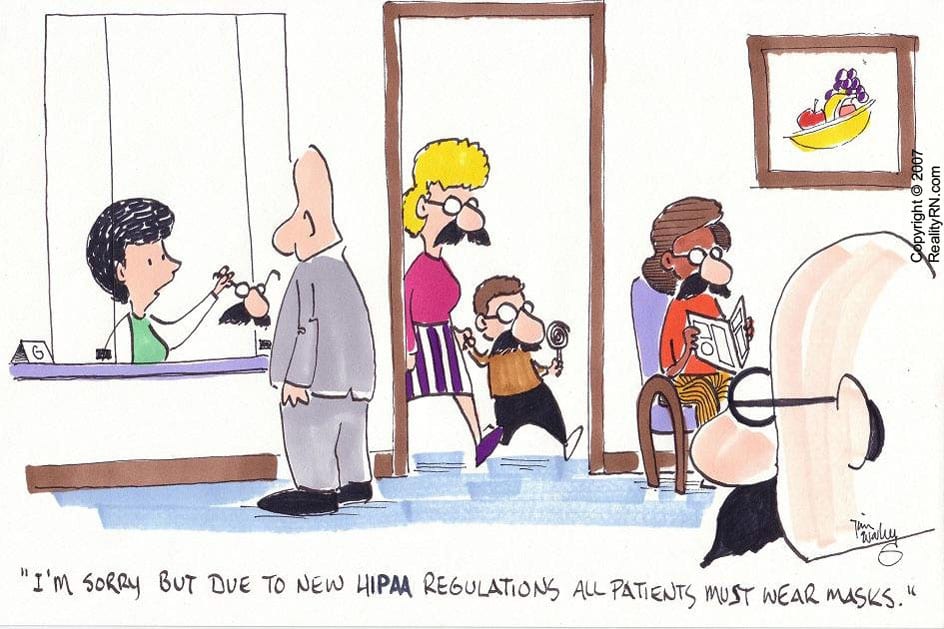
The Health Insurance Portability and Accountability Act, was created in 1996 to protect the privacy of individually identifiable health information (read more here). In a nutshell, it gives patients the right to have their personal information respected and concealed.  All information is protected-electronic, written, and oral-and can not be shared or displayed without a patients approval. This information includes diagnosis and treatment, billing/payment information and conversations with health care personnel. Health Care plans (insurance), personnel, and third parties must all adhere to these rules and there is a hefty price to pay if you don't ( like $900k UCLA paid in 2011). HIPAA also gives patients access to their own medical records at any time and the ability to file a complaint if they feel their information has been accessed or used inappropriately.


Plain and simple, unauthorized disclosure of patient medical information is illegal. I am assuming Chris' health documents had to be disclosed in a court of law, but I am not sure if he agreed to have it released to the general public.  The question is why do we know all of his medical problems, and do we need to know?The media's obsession with celebrities has created an environment where more is never enough. Though HIPAA is intended to protect privacy, I think it drops the ball with celebrities. We may feel that full exposure is the price to pay for being rich and famous, but imagine if the whole world knew you had HIV, or that you wet the bed because of PTSD ( yea, they revealed that about Chris too).

Whatever your thoughts are on Chris Brown, I believe he is the victim of a society with a disturbing fascination with other people's problems. For his sake, I hope he gets the help he needs. For the rest of us, I hope we can all realize that the price of fame should not include breaching of medical privacy. No one deserves that.

OhemaasMD


Tuesday, March 18, 2014

How I Did It: Pharmacy


Joann is a PharmD candidate in Florida. To ask her questions, comment below!

How and why did you choose this career?

I knew from a young age that I wanted a career in the health care field. My mom was a nurse so I grew up around hospitals. Based on this interest, I chose pharmacy through a process of elimination. By junior high school, I knew I didn’t want to be a nurse or a doctor and I didn’t want to deal with bodily fluids.  At this point, my mom gave me the idea of pharmacy as a stable and flexible job. I was attracted to the stability this career had to offer along with the flexibility for family life. Also I happened to enjoy chemistry. I was fascinated by drugs and their ability to alter the body. I did some research on pharmacy and in high school I shadowed some pharmacists. Once my mind was made up that was it.

What is a typical day in your work like?

This description will be from the point of view of an intern in a retail/community setting meaning; any pharmacy location outside of a hospital or long term care facility. In the morning, the pharmacist logs into the pharmacy’s system to find a list of prescriptions that people called in to be filled and checked before being picked up. There may also be voicemails to get, left from doctor’s offices calling in prescriptions. Typically the morning is quiet and consists of filling prescriptions. Once customers start coming in and phones are ringing, it is the pharmacist’s job to counsel patients on their medications and answer any medication questions that may come up. So, it gets busy because there are continually prescriptions to be checked, as well as interacting with patients. This is why having good technicians and interns is so important. They are a big help because they can do almost everything a pharmacist does, except for the final medication check for drug interactions etc. before it goes out to the patient and advising/counseling patients. Also, only the pharmacist or intern can give immunizations (in some states like FL, interns cannot immunize). For example; if anyone walks in for a flu or shingles shot. A technician can prepare the vaccine, but the pharmacist would administer it. The only time most pharmacists sit down is during their lunch break.

What are the most and least rewarding aspects of your job?

The most rewarding is just knowing you are providing people with the care and medication therapy they need to help them feel better. Something as simple as helping someone choose the right over the counter product for their particular problem. However, the least rewarding is having to play “drug cop”… let me explain. The top three most widely prescribed medications in this country are narcotics. This class of drugs are also the most abused. They are typically prescribed for pain and they can be very addictive. So part of our job ends up being the regulation of these drugs. For example, telling patients no they can’t get them early etc. There are a lot of rules involved with filling this class of medications and we have to make sure the correct protocol is being followed. Here is a funny rendition of this scenario: http://youtu.be/YmDFN3aIhZc

What education requirements are needed and what colleges do you recommend for pursuing an education leading to this occupation?

A Doctor of Pharmacy (PharmD) degree from an accredited pharmacy school is required to work in retail/community pharmacy. Then an additional one or two year residency is required to work in most hospital pharmacies. Pharmacy is a career where the university doesn’t matter. As long as it is an accredited program. My only advice is when choosing schools, compare costs of tuition as well as cost of living in that area. Also, check what the school’s remediation policy is. For example: some schools don’t offer the option to retake a class in the summer if you don’t pass it the first time. So depending on the class, the student may be held back for a year.

What high school and college classes have you found most applicable/important for your occupation?

All science and math classes. For both high school and undergraduate especially calculus and organic chemistry.

Would you choose this career if you could make the decision again? What would you do differently?

Honestly, I don’t think I would choose this career again due to various discoveries I have made about myself since getting into pharmacy school. I probably would have chosen to get a master’s degree in public health or to be a naturopathic doctor (ND). Read more about this profession here: http://www.huffingtonpost.com/michael-stanclift-nd/naturopathic-doctors_b_1923371.html

However, I do believe God has a good and perfect plan for my life and pharmacy is a part of this plan for a reason.

What do you wish you knew but didn’t when you first contemplated this career?

I wish I knew more about the academic requirements of pharmacy school. To be honest, I was fairly naïve about this and so I encourage prospective students to research this extensively. It is not enough to be good at science and to have a good memory, math needs to be a strong point too! There is a lot of math involved which is a weakness for me. Also, it is a huge sacrifice to your personal life. Personally, I have had to put a lot of things on hold in order to make it through successfully. This is not the case for everyone, but it has been my experience so far.

Are there any trends that concern you? Any trends that will make this career choice more or less attractive in the future?

Well, I would say a PharmD is not as marketable now as it was about ten years ago. It has become a very popular career choice therefore, the market in some parts of the country (like Florida) can be saturated. The reason is that there are six pharmacy schools just in Florida alone. Each one of those schools graduates a hundred or more students per year. Simply do the math, there just aren’t enough pharmacies in one state to employ all those graduates. But, as long as someone is willing to move, there are still plenty of job opportunities in other parts of the country. Therefore, it is still an appealing career in terms of stability and flexibility.

Career and Family Balance.

In my opinion, pharmacy is a great career to balance work and family. This is why so many women choose this profession. In fact, last year Forbes ranked pharmacy as the best paying job for women. This year U.S. News ranked pharmacy as the third top career in healthcare based on solid employment growth and a high median salary. http://money.usnews.com/careers/best-jobs/pharmacist

Salary.

 According to www. http://www.bls.gov/ooh/healthcare/pharmacists.htm entry level pharmacists in 2012 were starting around $100,000- 116,000 a year, making $50-56 dollars an hour. In my experience, pharmacy interns make anywhere from $10-17 an hour depending on the state and company. With experience, the top 10 percent of pharmacists can earn more than $145,910 per year. Words of advice: Explore as much about pharmacy as you can before entering pharmacy school. Do your research. Do not be driven by dollar signs alone, because this is a fleeting motivation. Especially explore blogs and forums that give personal perspectives on being a pharmacist/ pharmacy student.

For more info about pharmacy:

1. http://forums.studentdoctor.net/categories/pharmacy-forums-pharmd.121/

2. http://www.bls.gov/ooh/healthcare/pharmacists.htm

3. http://www.pharmcas.org/advisors/start.htm

4. I recommend watching YouTube videos that portray pharmacy.