Sunday, December 21, 2014

Cole Said It Best

J. Cole

Michael Brown. Eric Garner.
I Can't Breathe. Hands Up. Don't Shoot.

 These are the names and terms that have been heard from the mouths of people across the country and globe for the past several weeks. The tragic shooting death of Michael Brown by Ferguson, Missouri police and the choking death of Eric Garner by Staten Island, NY police in 2014 have resonated in the souls of men, women, and children alike. The shooting death of 12 year old Cleveland native Tamir Rice by a police officer has also ignited fury and calls for justice for those affected by police brutality and a criminal justice system that has at times not acted appropriately towards members of the community.

Hip hop artist J. Cole said it best in the lyrics of his song "January 28", off the album 2014 Forest Hills Drive.
What's the price for a black man life? I check the toe tag, not one zero in sight~ J. Cole
 
African American men are continually dying in the hands of those that have sworn to protect them. There are many correctional officers who are doing a great job of serving their community, however there are a few whom may be doing more harm than good. After grand juries failed to indict the officers involved in the Brown and Garner cases thousands of protests, marches, and boycotts have occurred throughout the nation demanding change.

#WhiteCoats4BlackLives, a coordinated protest on December 10 by medical students in over 70 medical schools in the US and Caribbean was created to not only protest against racial discrimination and police brutality, but to also shed light on the injustice which happens to blacks within the health care system.

"Die-In's consist of medical students in white coats and other individuals laying on the ground, most for four and a half minutes- representing the four and a half hours that Michael Brown's corpse layed on the ground after being shot.

The hope in these demonstrations is to open a much needed dialogue amongst health care professionals, healthcare systems, and the general public about the large disparities people of color face in receiving sufficient health care. Racial discrimination in itself has a direct impact on mental health, leading to increased stress, behavioral issues, depression and suicide. To often minorities are unable to receive the medical help they need due to various socio-economic or prejudicial constraints. The alarming low rate of African-Americans matriculating into US medical schools is also raising concerns that lack of diversity amongst providers will  affect the patients' views and possible use of the health system. 

As student doctors we are obliged to recite the Hippocratic Oath during medical school. The oath is a public declaration of our aim to uphold certain ethical standards. Do No Harm (non-maleficence)  claims a physician will refrain from providing futile treatments or act with malice towards a patient.

I believe that just as physicians are held accountable for inappropriate conduct and malpractice, police officers should be held accountable for improper handling of force and weapons, as well as discrimination. How a choke hold is not considered unlawful is beyond my understanding, but the continual abuse of members of the general public by law enforcement needs to come to an end. Both the criminal justice system and the health care system are responsible for the general well-being of the community at large.If the public can not trust us, we who have dedicated our lives to helping them, then who can they trust?

Look at the nation, that's a crooked smile braces couldn't even straighten ~ J. Cole


Below are photos of various Die-In's

John Hopkins School of Medicine
Albert Einstein College of Medicine
Texas A&M Health Science Center College of Medicine

Morehouse College
Howard University School of Medicine
University of California, San Francisco

Harvard Medical School

Image Source

** OhemaasMD in no way supports the recent shooting death of two NYC police officers, in apparent revenge for Eric Garner

Tuesday, December 16, 2014

TIME Person of the Year


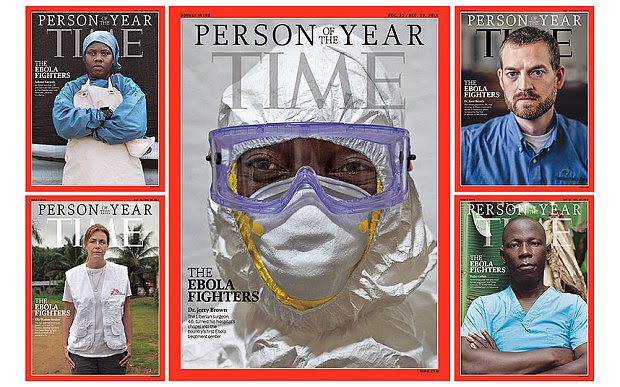
Last week, TIME magazine bestowed it's beloved award of Person of the Year, not to an individual but to an entity. The Ebola Fighters were named 2014's Person of the Year for their “tireless acts of courage and mercy." Recipients include the many doctors, nurses, and numerous health care workers working to end the epidemic which has already claimed over 6,000 lives. The people in the field also included Doctors Without Borders/Médecins Sans Frontières (MSF), and the Samaritan Purse Christian medical relief team. 

The epidemic, which initially wrecked havoc in Liberia, Sierra Leone, and Guinea eventually crossed international water with cases in the United States and Europe. The White House welcomed the TIME magazine award as a tribute to the "heroism and selflessness" of countless health care workers."The administration, including the president, could not be prouder of the brave men and women who've committed themselves to this effort in a foreign land," said spokesman Josh Earnest.


                                           TIME Magazine Ebola covers

The resilience, tirelessness, and dedication of  The Ebola Fighters is unrelenting and under appreciated. Fighting a disease which could (and did) easily claim their own lives, the health care workers put their own well being aside to take care of individuals and even entire families. We must also not forget the ambulance drives and burial teams who also aided in providing care and peace to thousands.
 The war against Ebola is not over and the global health system is not as strong as previously perceived. Those who are not on the front line can still help, by supporting organizations fighting in Ebola stricken countries like The Red Cross and Doctors Without Borders. Monetary contributions, supplies and even prayer are welcome. We are grateful to the Ebola fighters as TIME magazine stated, "For tireless acts of courage and mercy, for buying the world time to boost its defenses, for risking, for persisting, for sacrificing and saving".


If you would like to donate,
Mamawa Inc and Sierra Leone Water are two organizations  spearheading the war against Ebola in Sierra Leone.
Also check out Doctors Without Borders


Sunday, December 14, 2014

The Signs of a Heart Attack


I recently attended a lecture given by an Emergency Medicine physician about recognizing and treating a patient with a heart attack. The talk touched on some very important points and inspired me to write this post. Namely, it is important to know that the signs of a heart attack differ from person to person, from man to woman, and from young to old, BUT there are some COMMON SYMPTOMS that we should all recognize. If you or someone you know has these symptoms, seek medical attention without delay!

What exactly is a heart attack exactly? 


It is literally an attack on the muscle of your heart (called the myocardium). During a heart attack, cholesterol plaque that has built up in your coronary arteries over time (the arteries that supply your heart with blood) rupture. As the plaque ruptures, a clot forms in the artery and cuts off the blood supply to the part of your heart that the artery was supplying with blood. Your heart muscle needs blood, just like the rest of your body, to survive. Without adequate blood flow, the heart muscle dies or infarcts. This is where we get the phrase myocardial infarction. 

Rarely, a heart attack can also be caused by coronary artery spasm.

TIME is MUSCLE. The sooner you seek medical attention, the better!

What are the symptoms of a heart attack?

CHEST PAIN. Sometimes this PAIN is more of a discomfort, squeezing, fullness, burning or pressure. It is not limited to the aforementioned and takes many forms. Most heart attacks give you discomfort in the middle of your chest below the breastbone. The pain can last for several minutes or come and go.
DISCOMFORT. In both arms, the back, neck, jaw or stomach.
SHORTNESS OF BREATH.
OTHER.  Cold sweats, nausea, vomiting or lightheadedness.

According to the American Heart Association, "As with men, WOMEN'S most common heart attack symptom is chest pain or discomfort. But women are somewhat more likely than men to experience some of the other common symptoms, particularly shortness of breath, nausea/vomiting, and back or jaw pain."

What can I do to prevent myself from having a heart attack?

Medications. Take the medications your doctor prescribes and go for check ups regularly.
Maintain a healthy weight.
Don't smoke. Smoking significantly increases your risk of heart attack and stroke.  Do not stroke. I cannot stress this enough.
Exercise regularly. Aim for 30 minutes of physical activity everyday. Do strength training at least 2x per week.
Manage stress. Don't let people and circumstances stress you out! Manage stress with deep breathing exercises, working out, massages and relaxing vacations.
Keep conditions that can lead to a heart attack in check. For example, high blood pressure, high cholesterol and diabetes.
Eat a heart healthy diet. There is a restaurant called the Heart Attack Grill where you can get too much food for one plate! Waitresses dress up like nurses and can even push you around in a wheelchair if you so desire. In fact, you dress up like a patient to eat there! But the best and worst part is, if you are over 350 pounds you eat for free! To prevent heart attacks, don't do this!


Click HERE for heart healthy recipes from the American Heart Association.


Access the American Heart Association's Heart Attack Risk calculator by clicking HERE.

  
charades cartoon humor: 'It was unfortunate timing that he suffered his heart attack while playing charades.'

Tuesday, November 25, 2014

In Transition


 “Fear, uncertainty, and discomfort are your compasses toward growth.” ~Celestine Chua

There comes a time in life when old things come to an end and new beginnings must commence. For Jemina and I, that time is now.

We have finally made it to the final lap of what has seemingly been an endless race. As the concluding year of residency dwindles from months to days, the light at the end of the tunnel is shining brighter. This is a very exciting time in our lives but it is also speckled with anxiety. Most of the uneasinness comes from not knowing for sure what lies ahead.

What do I do next?
Where do I go?
Will I match into a fellowship program?
 What will I do if I don't?
Will I pass my board exam?
Am I happy with my career?

The biggest worry is concern over whether or not I'm actually a good doctor and know what I'm doing. We all suffer from lack of confidence from time to time and that feeling is heightened when your decisions impact the lives of others. I am reassured in the fact that I have been exceptionally trained and have experienced a multitude of situations which have improved my clinical expertise.

 Rather than dwell on the negative, I'm focusing on the benefits of transition and the positive impact it has. A few of the perks of transitioning include allowing me to

Shape my identity- I can confidently acknowledge who I am as a woman, physician, and mentor and ascertain I am proud of who I am

Refocus on life goals- I need to decipher what is important to me and create new goals I'd like to accomplish                

Reflect- Recollecting on the difficulties of residency as well as the conquered challenges, I realize I have come a long way

Refocus- I need to recognize that there are skills that still need to be improved and honed prior to completing residency.This will allow me to act mindfully and with intention within the final few months

Be an optimist- Things will work themselves out, they always have and they always will!

 Deciding what's next can be a harrowing experience. Considering the who, what, where's, and why's can by overwhelming. Rather than cause unnecessary stress I am focusing on taking things one step at a time, allowing life to unfold on it's own. I am confident that no matter which direction I go, God is on my side and will place me exactly where I am supposed to be.

 Robert Frost's infamous poem "The Road Not Taken" perfectly describes the impact of transitioning

                                         The Road Not Taken
Two roads diverged in a yellow wood,
And sorry I could not travel both
And be one traveler, long I stood
And looked down one as far as I could
To where it bent in the undergrowth;        5
Then took the other, as just as fair,
And having perhaps the better claim,
Because it was grassy and wanted wear;
Though as for that the passing there
Had worn them really about the same,        10
And both that morning equally lay
In leaves no step had trodden black.
Oh, I kept the first for another day!
Yet knowing how way leads on to way,
I doubted if I should ever come back.        15
I shall be telling this with a sigh
Somewhere ages and ages hence:
Two roads diverged in a wood, and I—
I took the one less traveled by,
And that has made all the difference.        20


 What major life changes are you going through?


Wednesday, October 8, 2014

Breast Cancer Screening

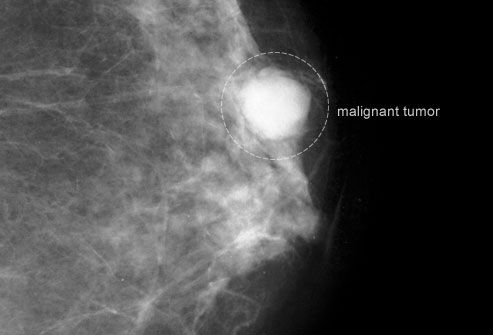
Mammogram Showing Malignant Tumor

    Screenings are a vital part of leading a healthy lifestyle because your doctor can catch a disease in the early stages when there is still a good chance to cure it. There is a lot of different information out there on who should get screened for what and when in regards to breast health. Most of the information will be based on the United States Preventative Task Force recommendations (USPSTF).


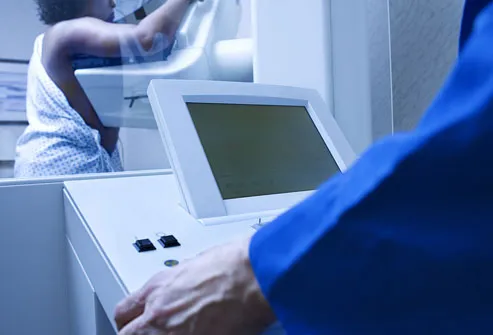
Woman Getting a Mammogram

WHO should get screened for breast cancer?
  •  All women should get screened for breast cancer no matter your race or ethnicity!
WHAT does breast cancer screening entail?
  •  Breast cancer screening entails self breast exams, clinical breast exams, ultrasound and mammography.
    • Self breast exams: I personally do not discourage women from doing monthly breast self exams (BSE), although it is no longer recommended that doctors teach their patients to do self breast exams because adequate evidence suggests that BSE do not reduce breast cancer mortality.
    • Clinical breast exams: Performed by a doctor, the clinical breast exam will look for major differences between the size of the two breasts, changes in color, abnormal discharge from the nipple, tender areas,and dimpling/ abnormalities of the skin. Clinical exams not only include the breast but the chest wall area above the breast, the underarm areas which have breast tissue, as well as lymph nodes.
    • Breast Ultrasound: if your doctor feels something suspicious in your breast, he/she may opt for an ultrasound first to get an initial clue to the anatomy of the tissue. Ultrasounds are usually preferred for women who are under 40 years old, or have low risk factors for breast cancer. 
    • Mammography: mammograms are low-dose radiation X-rays that can find a lump before you even know it's there. They are able to give a more accurate view of breast tissue and anatomy. They are highly sensitive for picking up abnormalities however normal results don’t always completely rule out cancer. Mammograms are the BEST way to screen for breast cancer.
    • If your mammogram is suspicious, the next procedure will most likely being a breast biopsy where a sample of breast tissue is examined under a microscope to look for malignant (cancerous) cell
    •  Women who have had breast cancer in the past and had a mastectomy, radiation or chemotherapy must STILL get yearly mammograms!
WHEN should women get screened for breast cancer?
  • While you are in your 20's and 30's, your doctor may preform clinical breast exams once every 1-3 years.
  • These exams may be performed by your primary care physician and/or Ob/GYN
  • The USPSTF recommends screening mammography for women aged 50 to 74 years every 2 years.
  • The decision to do a screening mammogram a woman below 50 years will be determined based on her risk factors including family history of breast cancer and any changes in her breasts. These women may also have mammograms yearly rather than every other year.
WHERE can women get screened for breast cancer?
  • Your primary care physician's office is a great resource and often a 1 stop shop for many screenings.
  • If you do not have insurance here are some other options:
    • CDC's National Breast and Cervical Cancer Early Detection Program (NBCCEDP) provides access to breast and cervical cancer screening services to underserved women in all 50 states, the District of Columbia, 5 U.S. territories, and 11 tribes.
    • Also, look out for health fairs in your area that may offer free breast cancer screenings
    • Contact your local health department to see if they offer any free screening resources.
  • More information on screening can be found here: United States Preventative Task Force- Breast Cancer Screening
WHY should women get screened for breast cancer?
  • Breast cancer is the 2nd most common cancer in women in the USA, only coming in second to non-melanoma skin cancer. It is also one of the leading causes of cancer death among women of all races. 
  • Here is the most recent data we have from the CDC, in 2009:
  • 211,731 women in the United States were diagnosed with breast cancer.
  • 40,676 women in the United States died from breast cancer.
Tell your mother, daughters, and friends to get screened and if you are a mother, daughter or friend don't forget to get yourself screened as well!

Tuesday, September 30, 2014

First Case of EBOLA in the U.S.


The EBOLA crises is NOT getting better in WEST AFRICA and now the virus has landed on US soil.

Medics load an Ebola patient onto a plane at Sierra Leone's Freetown-Lungi International Airport on Monday, September 22.
A patient with EBOLA being taken on a plane in Sierra Leone. 

A mystery person in Dallas, Texas is the first to be diagnosed with Ebola in the U.S. The city of Dallas released a statement saying that he or she "moved to Dallas from Liberia a week ago." The CDC is on the case and tells us that the patient is very ill and in intensive care. They arrived to the U.S. on the 20th and presented with symptoms 4 days later. Now it is up to the CDC to find everyone the patient had contact with over the last 4 days and isolate those people for 3 weeks while they are monitored for symptoms. Ebola is not spread through the air like the flu, it is spread through bodily fluids, but if you shook hands with this person you would have to be isolated for at least 3 weeks! 

Ebola under a microscope


 "Every morning we only open one of our centers for 30 minutes, just to admit people who can fill in the beds of the people who died overnight. This is how bad it is. And the rest of the day, we are turning patients back home to go and infect their neighbors and loved ones. So this is not at all under control."
Liu, the President of Doctors without Borders explains the desperation of the situation in an Ebola treatment center headed by Doctors Without Borders in Monrovia, Liberia's capital.


What is Ebola?

Ebola virus disease, also known as Ebola hemorrhagic fever, is a debilitating illness transmitted to people by animals (such as bats) with a fatality rate of about 50%, but fatality rates have ranged from 25 to 90% in recent outbreaks.  


What needs to be done in order to keep outbreaks under control?

It is important that the community is involved in recognizing the signs and symptoms of Ebola, tracing where someone may have contracted the virus, reliable laboratory services and safe burials.


How do you treat Ebola?

Fluids, fluids, fluids and treatment of symptoms as they arise. Per the WHO, "There are currently no licensed Ebola vaccines but 2 potential candidates are undergoing evaluation." These vaccines have been used in cases with some success.


Where is the Ebola outbreak exactly?

This is the deadliest Ebola outbreak in history. This outbreak is particularly concerning because in the past, Ebola has been confined to small villages near rain forests, but now it is being found in major populated cities like Freetown in Sierra Leone. President Obama recently pledged to do more in terms of sending health care workers to West Africa as well as $$$. The map below outlines the countries affected. Nigeria's outbreak is reportedly under control.


http://nigeriacommunicationsweek.com.ng/sites/default/files/styles/image-standard/public/field/image/Ebola-patient.jpg?itok=meYLlzis
What can I do to help?

Click here ---> FIGHT EBOLA


EBOLA AID
Volunteers of the United Nations Development Program raise awareness by teaching school children the symptoms of Ebola


"There is still a significant gap between where we are and where we need to be," Obama said. "We know from experience that the response to an outbreak of this magnitude has to be fast, and it has to be sustained. It's a marathon, but you have to run it like a sprint." - President Obama

Do you think people from countries that are known to have active EBOLA outbreaks should be allowed to travel abroad?

Wednesday, September 24, 2014

Survival 101: Pre-Med


When I first started my journey to medicine I honestly did not know where to begin. Unlike many doctors I know, I did not make the decision to fully pursue medicine until my senior year of college (late, I know).
Being late in the game and having very few friends who were following the MD path made it  even more stressful. Looking back  to my undergrad years there are a few things I probably would have done differently.  Here's a list of things you should consider during your college years to prepare for a career in medicine. In the future we will be discussing surviving medical school, residency, and even fellowship so stay tuned!

Make sure you really want to do this
Being a doctor is tough, period. It takes dedication, sacrifice, physical and mental stamina, and the reality of delayed gratification.I suggest anyone who is interested in medicine to do some soul searching and ask yourself, " Is there anything else I could see myself doing that would make me has happy as medicine would". If not,buckle up, you're in for a ride. Also make sure you are doing it for the right reasons. If it is pressure from family or loved ones, or to make money, you may want to rethink this because personal gratification should ultimately be the goal.

Realize it will be a challenge
One of the hardest parts about preparing for medical school is getting in. Once you're in you've already proven that you have what it takes to face the challenge. Many medical schools also work very hard to make sure students graduate (tutors, additional study aids,etc). However prior to matriculation there may be some obstacles. Don't give up! You may have a bad semester, or topics may not make sense no matter how hard you study, but as an over comer you will be better prepared for the pleasures and pitfalls of medicine.

Be ready for the naysayers
With the constant change of the healthcare system, physician reimbursements being cut every year, and the ever growing rates of med school debt, some feel being a  doctor is not as "glamorous" as it used to be. Many people will ask you
Why do you want to be in that much debt?
Don't you want a life?
Don't you want to actually see your family?
Do you want to be in school forever?


You may not have all the answers, but if you know in your heart this is what you want to do, then you don't have to explain anything to anyone. Besides, these same people will probably be asking you for medical advice in a few years ;)

 If you have concerns about the future of medicine there are more than enough doctors (including us!) who will tell you what it is really like to be a doctor.

You don't have to be a biology major
In the past, it was thought that biology was the only major that would get you into medical school. However that myth has been debunked, as more nontraditional students are now matriculating into medical school.

Admission commitees don't care what major you do, as long as you have a good MCAT score, and do well in your undergrad courses. The most important thing to consider when choosing a major is whether or not you enjoy the subject matter and will excel at it. Consider a major in the humanities, social sciences, or various health sciences.

 Focus Focus Focus
The hours of studying while your friends are out for Thirsty Thursday, Faded Friday and the rest of the awesome weekend is no fun at all. There were many a day that I watched my friends go out while I had to stay home and study for an OChem or Physics exam. And lets not talk about when I had to prepare for the MCATs. You may feel discouraged and even wonder why you are pursuing this studious life- but remember the end of a matter is better than the beginning.

The era of social media also makes focusing all the more difficult. In order to reach your goal, you may have to deactivate your Facebook or Instagram account to spend time on your goal.

 Find a supportive counselor/mentor
This can not be stressed enough. Having a counselor or administrator who has aided others in getting into medical school will help you navigate the exhaustive work of applications, recommendations, and college courses.
A mentor during medical school is also a valuable resource who can guide you and give you tips on how to succeed in medical school.A mentor should be someone you are close to and can discuss your academic (and sometimes personal) concerns with. Look for someone you admire; someone who you wish to aspire to be like.

Get clinical exposure
This includes shadowing your family physician, volunteering with the medical team at a marathon, volunteering at a hospital or free clinic, even doing a medical missions. Clinical exposure will show that you are invested in your career and are willing to go the extra mile to immerse your self in your career field of choice early on.

Source

Complete an internship or research
Internships, pre-med summer programs,  and collegiate research are a great way to get more exposure in the medical field. They are also great application boosters. Research will show that you are invested in the sciences as well as interested in not only treating patients but figuring out the hows and whys of health.
Summer programs give a glimpse into the medical life. I participated in the SMDEP (Summer Medical and Dental Education Program) in undergrad and this experience solidified my decision to go to medical school.

RIT has a comprehensive list of programs here

Save Money
Applying to medical school is expensive.  From paying for applications, secondary applications, MCAT review books/courses and traveling for interviews you can easily spend a couple thousand dollars. In college saving money is hard with expenses of daily living, but even if you can put away a couple dollars every month you will be in a better position when you begin the application process.

 Have a life!
College is supposed to be some of the best years of your life. Even as a hard worker and dedicated student, you can still have fun! Don't let those years pass you by without some great memories made.

Extra curricular activities are just as important as your grades. Medical school admissions committees love well rounded students. They are especially interested in your non medical endeavors. Leadership activities will show you have what it takes to take charge in the health care world. Get involved in sports, clubs and societies (and not just the Alpha Omega Alpha Honor Society!). If you are a minority, I suggest getting involved in your local MAPS- Minority Association of Pre-Med Students (MAPS-SNMA) chapter. It is a gateway to numerous resources for education, mentorship, and advocacy.

 Consider other options
 The beauty of college is that it opens your eyes to ideas you may have never known before. Keep an open mind about your future career plans. Take the time to look into other health fields or careers in general; you may surprise yourself by realizing there are other things that interest you or you are good at. I'm not saying to give up on your dream of becoming a doctor, but also recognize that your talents may be vast and many.


Good resources for more information are
PreMed Revolution
PreMed Life


What other pre-med tips do you suggest?