Thursday, April 4, 2013

Women's Health Screening Series: Breast Cancer

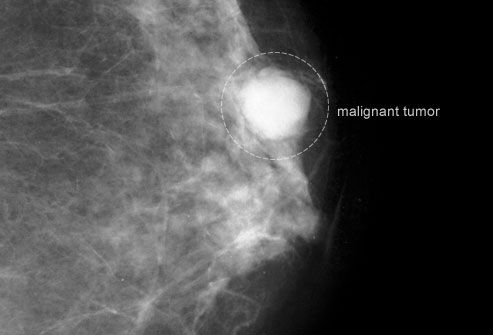
Mammogram Showing Malignant Tumor

                         
 We are happy to embark on a new series! The Women's Health Screening Series will be a 3 part series that explains the WHO, WHAT, WHEN, WHERE and WHY of important health screenings for today's woman. (For our male readers: don't worry this pertains to you too because you can share your new found knowledge with the women in your life!) Screenings are a vital part of leading a healthy lifestyle because your doctor can catch a disease in the early stages when there is still a good chance to cure it. There is a lot of different information out there on who should get screened for what and when. Most of the information will be based on the United States Preventative Task Force recommendations (USPSTF). We will break it down for you in a way that is both short and sweet.

First up is the most widely discussed female cancer, BREAST CANCER.
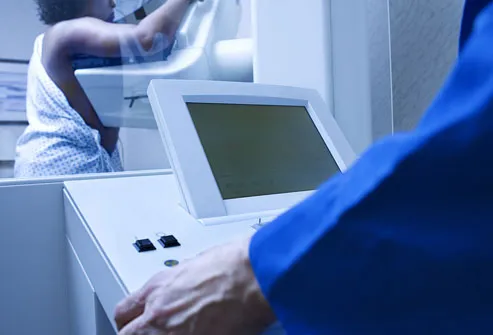
 
Woman Getting a Mammogram

WHO should get screened for breast cancer?
  •  All Women should get screened for breast cancer no matter your race or ethnicity!
WHAT does breast cancer screening entail?
  •  Breast cancer screening entails self breast exams, clinical breast exams and mammography.
    • Self breast exams: I personally do not discourage women from doing monthly breast self exams (BSE), although it is no longer recommended that doctors teach their patients to do self breast exams because adequate evidence suggests that BSE do not reduce breast cancer mortality.
    • Clinical breast exams: these are exams preformed by your doctor.
    • Mammography: mammograms are low-dose X-rays that can find a lump before you even know it's there, though normal results don’t completely rule out cancer. Mammograms are the BEST way to screen for breast cancer.
WHEN should women get screened for breast cancer?
  • While you are in your 20s and 30s, your doctor may preform clinical breast exams once every 1-3 years.
  • Women 40 and above should have a mammogram yearly, however some women who have family members with breast cancer may be at a higher risk. These women should talk to their doctors about the possibility of starting screening mammography at a younger age.
  • The USPSTF recommends screening mammography for women aged 50 to 74 years every 2 years.
WHERE can women get screened for breast cancer?
  • Your primary care physician's office is a great resource and often a 1 stop shop for many screenings.
  • If you do not have insurance here are some other options:
    • CDC's National Breast and Cervical Cancer Early Detection Program (NBCCEDP) provides access to breast and cervical cancer screening services to underserved women in all 50 states, the District of Columbia, 5 U.S. territories, and 11 tribes.
    • Also, look out for health fairs in your area that may offer free breast cancer screenings
    • Contact your local health department to see if they offer any free screening resources.
WHY should women get screened for breast cancer?
  • Breast cancer is the 2nd most common cancer in women in the USA, only coming in second to non-melanoma skin cancer. It is also one of the leading causes of cancer death among women of all races. 
  • Here is the most recent data we have from the CDC, in 2009:
    • 211,731 women in the United States were diagnosed with breast cancer.
    • 40,676 women in the United States died from breast cancer.
So please tell your mother, daughters and friends to get screened and if you are a mother, daughter or friend don't forget to get yourself screened too!

Sunday, March 24, 2013

Gel Manicures: Dazzling, Durable and Dangerous?


Your regular run of the mill manicure is cute but you're fortunate if it lasts 2 whole days without smudging, chipping or peeling - and that means you have to be extra careful when you do the dishes, scrub the kitchen or wash your hair! Gel manicures are dazzling, durable, and in most cases they can last anywhere from 10-12 days...but are they dangerous? Now don't get me wrong, I love a good gel manicure, but if you frequently get gel manicures...


 Here are a few things to consider the next time you think of getting another one:

  • Gel manicures leave your nails brittle. This may be due to the gel nail polish itself, but it is also definitely due to the amount of acetone it takes to soak the polish off of your nails. Acetone can dry out your skin and lead to irritant dermatitis - inflammation and irritation of the skin around the nail.
  • If the skin around your nail is irritated and inflamed it can predispose you to infections, because the skin barrier is easily broken.
  • In order for most salon offered gel manicures to set properly, the drying process involves UV-light. Regular UV-light exposure has been associated with early skin aging and skin cancer.
  • Finally, if you always have polish on your nails you may miss some skin changes, such as a tumor or an infection that could be brewing underneath the pretty polish. 


Not to fret, here are some tips for good nail hygiene: 
From aafp.org "Evaluation of nail abnormalities"
 
  • Make sure the nail salon you patronize practices good sterilization techniques for all their equipment to minimize the chances of you getting a fungal infection from another customer. Some nail salons actually use one set of equipment per customer, they put your name on the box of tools that they use only for you. Or if you frequent nails salons a great deal, you can bring your own nail equipment from home.  
  • When getting a gel manicure, wear sunscreen on your hands to minimize your exposure to the UV light during the curing process. Also, go to salons that use LED lights- a good alternative to UV lights.
  • Ask your manicurist not to push your cuticle too far back during the manicure- this dries out your nail, leads to inflammation and could introduce infection. Your cuticles were made for a purpose, they are good for you!
  • Try to keep your nails hydrated with lotion, oils and Vaseline to fight against brittleness and chipping.
  • Don't chip your gel manicure off with your nails or anything else!
  • Soak your nails, not your entire hand in the acetone. Or better yet, use acetone and toluene-free polish removers to prevent completely drying out your nails.
  • Finally, makes sure you take some time between manicures to let your nails breathe and to take a good look at them. If you see anything strange, go see your doctor right away.
       

Like almost everything in life, use gel manicures in moderation so you can look and feel as fabulous on the inside as you do on the outside!


Friday, March 22, 2013

What Should I Ask My Doctor? (And Pics of Trailblazers:)

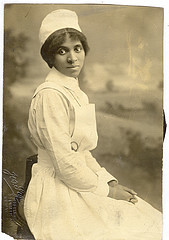
Susan McKinney Steward was the first black female doctor in the state of New York and the third in the nation. She started a successful medical practice in Brooklyn, New York, serving a variety of people.
When is the last time you went to the doctor for a check up? We are all guilty of being very busy and putting other people or responsibilities before our own well being, but the truth is NONE of us can afford to put aside our own health. Truthfully speaking everyone should go to the doctor at least 1 time a year for a check up. But once you get to the doctor, what are you going to talk about? Firstly, there is no need to be nervous, embarrassed or shy when you visit the doctor. Feel empowered to take charge of your health by asking the really tough questions. That thing that you're wondering about, yeah... ask us that!

Patricia Bath
Doctor Patricia Bath, an ophthalmologist from New York, was living in Los Angeles when she received her first patent, becoming the first African American female doctor to patent a medical invention. Patricia Bath's patent (#4,744,360) was for a method for removing cataract lenses that transformed eye surgery by using a laser device making the procedure more accurate.


Some Tips 
  • If you take any medicines, bring a list of your meds with you -include the dose and frequency.
  • Bring a notepad with questions that you thought to ask before your visit.
  • If it makes you feel more comfortable, bring a friend, spouse or your adult child with you. They can help you remember what the doctor said once you get home and ask the questions you may have forgot to ask.
Now that you are at the doctor's office, what are you going to ask her? 

The U.S. Department of Health and Human Services has come up with 10 questions we should all keep in mind depending on the situation.
  1. What is the test for?
  2. How many times have you done this procedure?
  3. When will I get the results?
  4. Why do I need this treatment?
  5. Are there any alternatives?
  6. What are the possible complications?
  7. Which hospital is best for my needs?
  8. How do you spell the name of that drug?
  9. Are there any side effects?
  10. Will this medicine interact with medicines that I'm already taking?
http://farm4.staticflickr.com/3198/2662107406_a3baebbc55.jpg
Susie King Taylor was a regimental nurse with the Union army during the Civil War. She was famous for using both conventional and folk techniques in helping the sick and wounded, and using the same techniques for her own health.

There is also a Health Question Builder that can help you come up with questions based on your specific medical needs. Remember, be empowered, take charge of your health and ask ask away!!!
 If you have family members or friends who go to the doctor often, share this post with them by copying it from here:  http://ohemaasmd.blogspot.com/2013/03/what-should-i-ask-my-doctor-and-pics-of.html

Friday, March 15, 2013

Vampire Facial- Safe? Worth It?

Being the reality TV junkie I pretend not to be, this week I watched a few minutes of  Kourtney and Kim Take Miami. In the beginning of the episode we watch as Kim Kardasian subjects herself to a "Vampire Facial".

US Weekly

The Vampire Facial, also known as Dermal Blood Fillers, is a new trend meant to revitalize skin and produce firmer, younger looking skin. The procedure involves removing the patient's blood from his arm, placing it in a centrifuge to spin and allowing the blood parts to separate.


Source

The plasma is then injected into various parts of the patient's face in the hopes that it will give a more youthful appearance to the skin; the cells within the plasma should support collagen production and an abundance of growth cells. The injection should be YELLOW, not red which makes me believe Kim's blood wasn't centrifuged enough to produce a good amount of plasma.


Source

                                                      
There has not been statistically significant scientific evidence to support this "age-defying" remedy and it's efficacy. However plasma, which is rich in nutrients and antioxidants has been shown to aid in skin regeneration. The real anomaly here is, if blood already circulates throughout the body and is essentially already under all skin (including the face), it is necessary to add more blood/plasma to the skin in an effort to combat aging?

Do understand that this procedure does have some risk, as using needles always carries a risk of infection. If it is done at a medical spa it does not have to be done by a doctor, so long as the spa is licensed under a physician. Also be prepared to pay as much as $1,000-$1,500 with each session, more if you add extra fillers to the package.....unless of course you're an Oscar nominee and scored a free session in your swag bag! Results vary from a few days to months depending on the person.

Kim Kardasian is only 32 so I am not sure why she is already subjecting herself to procedures in attempts to defy aging. She has already Botoxed, Lipoed, and God knows what else. One thing's for sure, it keeps people talking about her.

Would you consider getting a Vampire Facial?
Watch the clip below


Monday, March 11, 2013

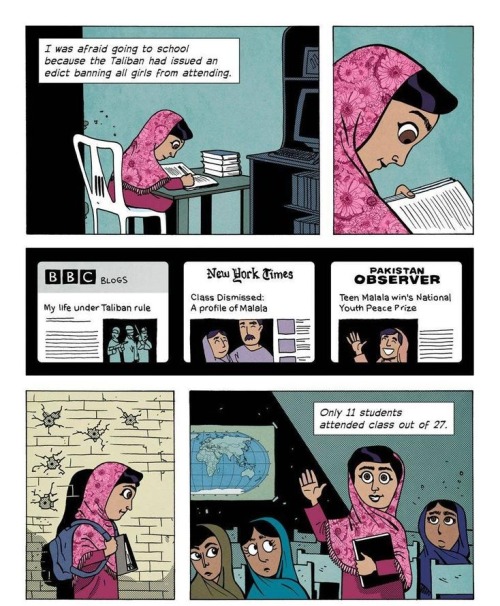
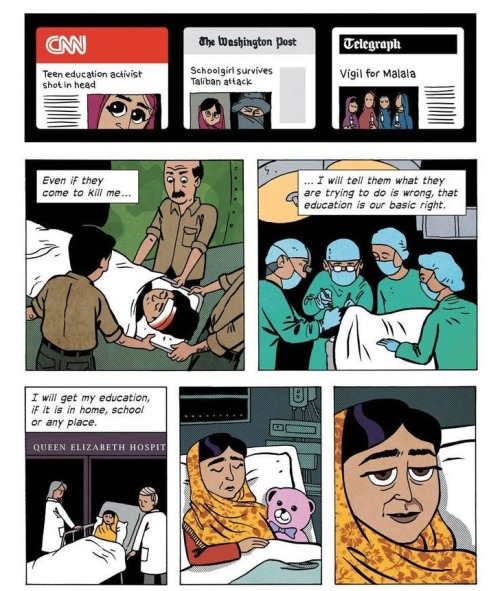
The Bravest Girl in the World


Malala Yousafzei
Nobel Peace Prize Winner
Comic Illustration by Gavin Aung Than


Stylin in Scrubs

I remember when the movie "Two Can Play that Game" came out in the 90's (showing my age) and my goal in life was to be a rocking business woman like the one Vivica Fox played. From the luxurious apartment to the fast sports car she drove,  I thought she had it all. What I envied the most were the fly business suits she would wear to work. I loved how stylish and put together she looked, always commanding respect when she entered a room.


Soon after, these chicks entered the television world and my obsession with glamorous work attire became even worse. 


Then I got this crazy idea that I wanted to be a doctor, never considering the fact that sexy suits just might not be suitable for the work place. When I began my clinical rotations in medical school I tried to add a bit of flare with my short white coat, always planning out my outfits the night before. Then my surgery clerkship started and I was introduced to a new way of life.


Aah, the scrub! The all-telling uniform of the hospital worker. I was now succumbed to two choices of outfit colors, blue or green. And I didn't even attempt to augment my look with jewelry; dangling earrings and Forever 21 necklaces are not an option in the OR.

Since starting residency I've since learned to embrace the scrub way of life and have come to appreciate the awesomeness of the scrub. Not only do I no longer have to iron in the morning, but I can snooze for an extra 10 minutes knowing that I just have to throw on a matching top and bottom and head to work. Granted being the fashionista that I (believe) I am, I still try to hook up my plain scrubs. 

♪ Gold all in my chain! 

One of the  major down sides to the scrub way of life is the facade it leads you to believe. Since they are drawstring and very roomy, you never realize how your weight is changing as you devour late night pizza, midnight ice cream, and coffee while on call.When you finally return to regular clothes.....well what do we have here, my pants won't zip!

Sadly, it's unconventional for doctors to wear the multi-colored, multi-patterned scrubs nurses are privileged to wear. Trust and believe if I could I'd wear cartoon scrubs all day like this I would.


So for now I'll wear my scrubs with pride! I may not be a smashing Carrie from Sex and the City, but I think I'm a pretty smashing doctor in my all cotton glory. One day I will be at the attending physician level where I'll be expected to dress nicely everyday. Until then I'll just have to add my best accessory to my scrubs- my smile :).


Wednesday, March 6, 2013

Ghana, Our Beloved Country

As Ghana celebrates it's 56th anniversary as an independent nation today, we'd like to share some of our amazing moments captured on camera Ghana last year.


Presidential Castle


Jollof Sushi- only in Africa!


Our favorite Gelato spot in OSU!

Rice all day, every day!


Kwame Nkrumah University of Science & Technology
Kumasi, Ghana